Home »
Case Studies
Every client’s situation is different, and so is our approach. Here’s what it looks like when we work with businesses and organisations to solve real security challenges.


Home »
Every client’s situation is different, and so is our approach. Here’s what it looks like when we work with businesses and organisations to solve real security challenges.
Australian Red Cross faced the challenge of managing inconsistent security standards across dozens of sites [...]
Watch Full Case Study
As a global luxury hotel brand operating 24/7, Grand Hyatt Melbourne required a security solution [...]
Watch Full Case StudyA national company with multiple sites across Australia was facing an industrial dispute. Staff at one of their entities were about to be locked out, and the company needed security support across multiple locations.
Their HR manager understood something that many organisations miss: security during industrial action isn’t just about managing a perimeter. How security presents itself during a dispute directly affects whether the workforce can come back together afterwards. They wanted a security partner, not just guards on a gate.
We sat in on every meeting with the company in the lead-up to the lockout. Not to observe — to understand. We needed to know the company’s culture, what all parties were hoping for, and what kind of outcome the business wanted on the other side.
The answer was clear: a peaceful resolution where everyone could return to work as a team. The company viewed the industrial action as part of the operating environment — not a personal conflict. That shaped everything we did.
Instead of large barricades and an aggressive security presence, we deliberately toned it down. Our officers were open, approachable, and discreet. No barricades. Informal engagement with staff. The goal was a visible presence that kept things safe without creating confrontation.
This approach worked because the staff being locked out weren’t aggressive. We assessed that early and adapted accordingly. Had the situation been different — if staff had been hostile or the risk of escalation was higher — we had additional officers and measures ready to deploy. But the security response matched the actual situation, not a worst-case assumption.
The dispute resolved after about a week. Staff returned to work as normal. Because there was no animosity over how people had been treated during the lockout, the company was able to move forward as a united workforce.
Too often, security companies approach every situation the same way. They don’t take the time to understand a client’s culture or what the business needs on the other side of a difficult period. The result is a one-size-fits-all response that can make things worse.
We left the client with a happy workforce, a pay increase on the table, and a group of people who will hopefully never even remember the name National Protective Services.
We’ve worked with the City of Port Phillip since 1992. Over more than three decades, what started as a security contract has become a genuine partnership — one that’s evolved as the municipality and its needs have changed.
Today, our team of 15 staff delivers over 12,000 contact hours per year across every council-owned structure, building, and public space in the municipality. That includes town halls, child care centres, maternal health centres, community centres, foreshore areas, adventure playgrounds, gardens, and public amenities.
Port Phillip is a diverse and evolving community, and the council’s priorities reflect that. Security here isn’t about locking things down — it’s about supporting an open, community-focused environment while keeping people and facilities safe.
Our officers lock, check, secure, and patrol every building, parkland, and public facility in the municipality. We handle all after-hours emergencies and alarm responses. But the approach goes beyond standard security operations. Our management team is trained in the council’s corporate plan, which means our officers understand the community objectives they’re supporting, not just the security protocols they’re following.
That distinction matters. When your security provider understands why a maternal health centre operates differently from a foreshore precinct, you get a service that fits each environment rather than applying the same approach everywhere.
A relationship that lasts more than 30 years doesn’t survive on contract renewals alone. It works because both sides invest in making it work. We’ve continuously adapted our service to match how the council’s needs have changed, and the council has treated us as a partner in delivering community outcomes, not just a vendor filling shifts.
Every report is delivered to the relevant council manager within agreed timeframes. Our team knows the sites, knows the community, and knows what “normal” looks like across 14 different types of facilities. That site knowledge is built over years, and it’s something you can’t replicate with a new provider on day one.
A busy shopping precinct with car parks, retail, cafés, offices, and nightlife venues needed to improve security coverage across the entire site. They wanted recorded footage of incidents for evidence and follow-up, and a visible uplift in security for their visitors and tenants.
But there was an important constraint: the security couldn’t feel intrusive. Patrons needed to feel safe, not surveilled. And the people managing the system day-to-day — the building managers — weren’t security professionals. They had a range of other responsibilities and needed a system they could actually use.
We scoped a full CCTV, access control, and alarm system across the precinct. The cameras were designed to provide both wide-area coverage and identification-quality footage in key areas — broad enough to monitor movement across the site, detailed enough to identify individuals where it mattered.
The system had to work for the people using it, not just the people who installed it. That meant intuitive footage retrieval, straightforward management, and a design that didn’t require security training to operate. If a building manager needed to pull footage after an incident, they could do it without calling us first.
The precinct was still under construction when we began, so the installation happened in stages alongside other trades. Pre-wiring went in early; the CCTV, alarm, and access control devices were fitted and tested in the final phase of the build. By the time the precinct opened, the full system was live and operational.
The system proved its value almost immediately. Early on, vandalism occurred in one of the car park levels. The CCTV footage provided clear identification shots of the individuals involved, and the information was passed directly to police.
Since then, the cameras have provided usable footage across numerous incidents — supporting both the precinct management and individual tenants. But the measure that matters most is the one you can’t count: how many incidents have been prevented simply because the system exists. A visible, well-designed security system changes behaviour before anything happens. That’s the point.
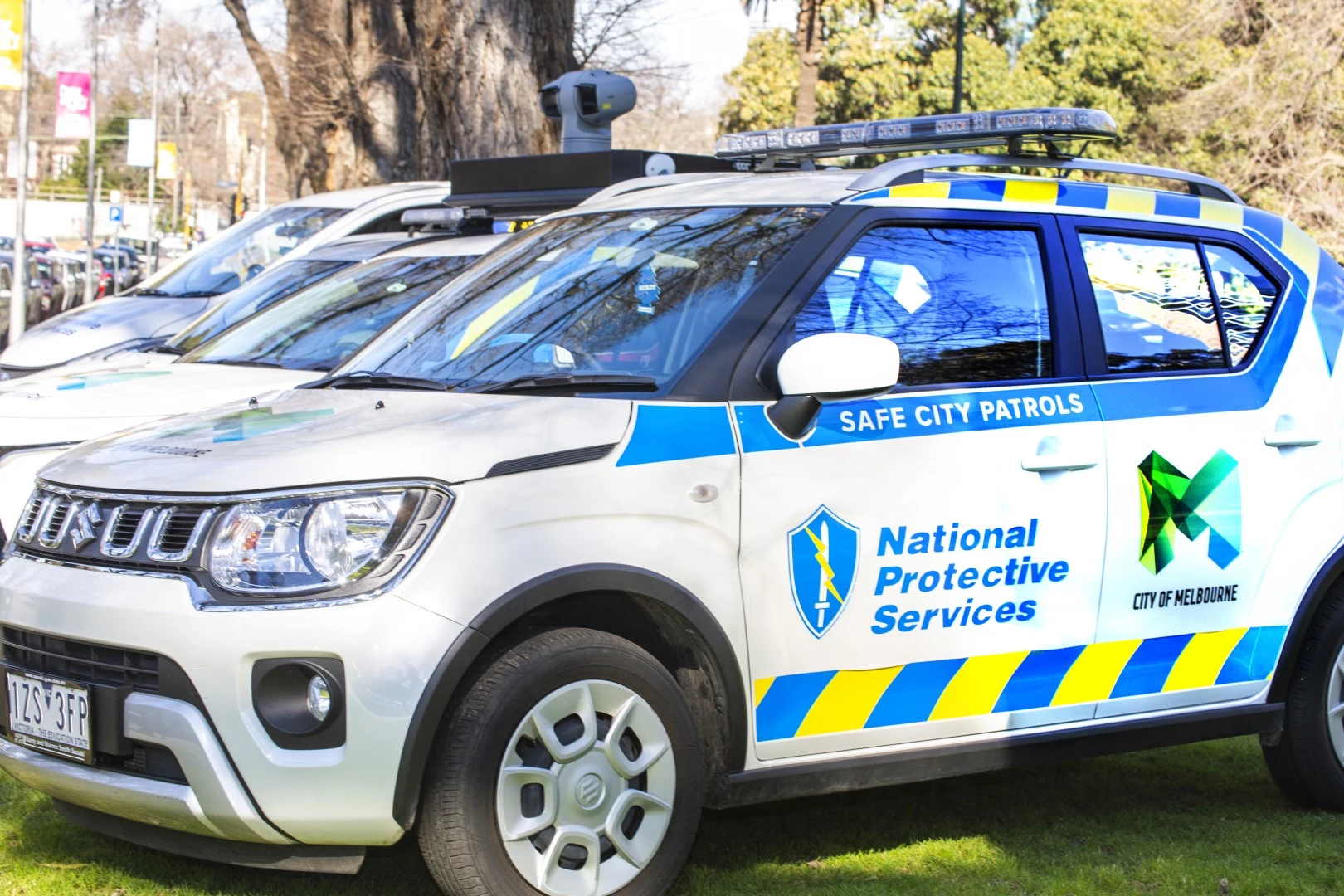
Want to see how we could approach your security? Talk to our specialist team today.
Our security specialists will find the right security solution for your needs.