

Event security doesn’t start when the doors open. It starts weeks earlier, with a site walkthrough, a crowd flow plan, and a conversation about what could go wrong.
The events that run smoothly are almost always the ones where the security planning happened early. The ones that don’t are usually the ones where security was the last thing booked.
Whether you’re organising a corporate function, a community festival, a concert, a sporting event, or a council-run celebration, this guide covers what event security involves, what it costs, and how to make sure you’re getting the right level of coverage for your event.
Event Security Is More Than Guards on the Door
When most organisers think about event security, they think about someone standing at the entrance checking bags. That’s part of it. But professional event security covers a much broader scope:
- Crowd management and flow, keeping people moving safely through entry, exit, and high-traffic areas.
- Access control, managing who gets in, where they go, and how restricted areas are protected.
- Emergency planning and response, including what happens if there’s a medical incident, severe weather, or something more serious.
- Coordination with police and emergency services.
- Traffic management, including vehicle and pedestrian flows, parking, loading zones, and vehicle-pedestrian separation.
- Asset protection, including equipment, staging, cash handling, and merchandise.
- VIP and performer management.
- De-escalation, including managing aggressive or intoxicated individuals before situations escalate.
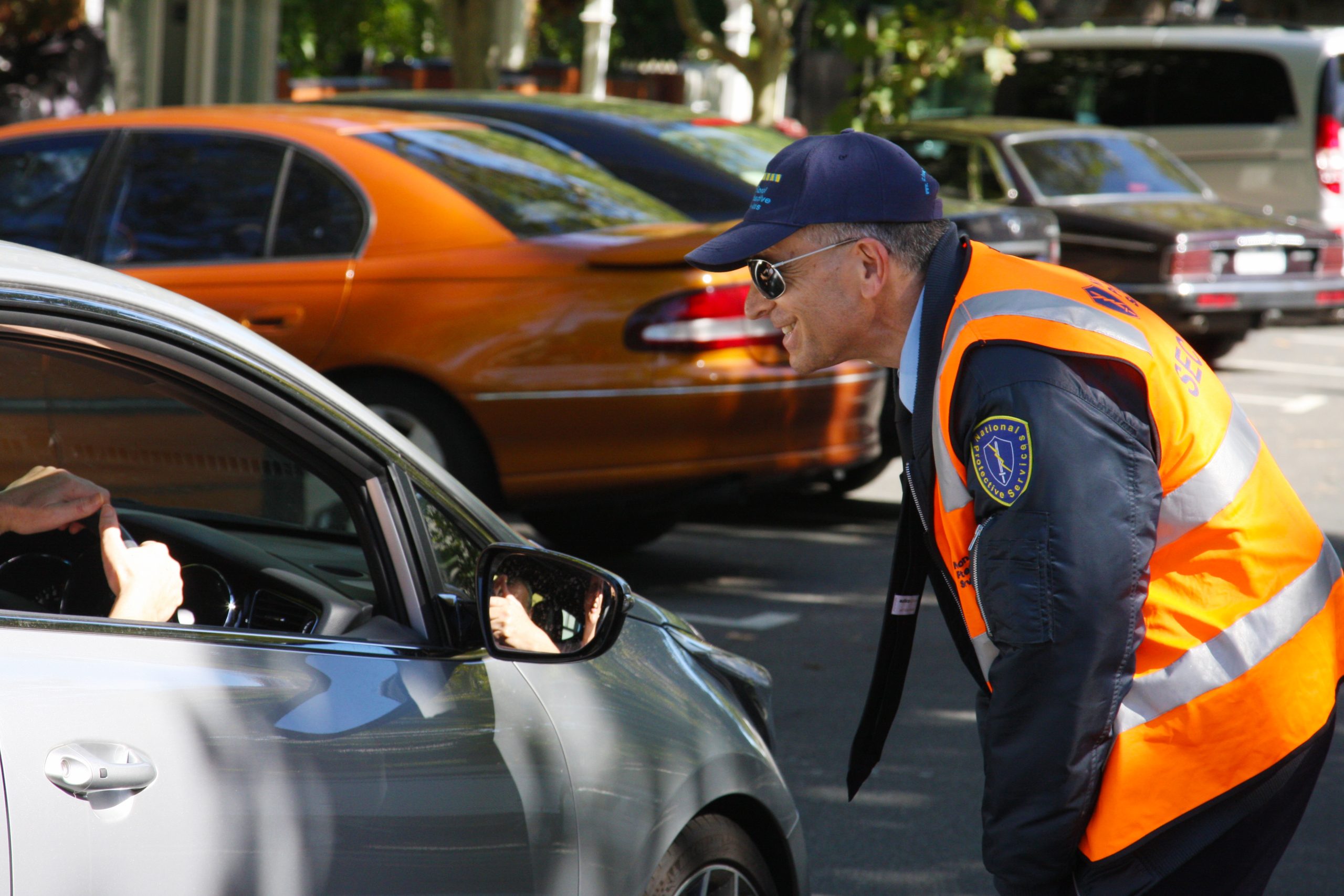
The security team’s job is to make all of this invisible to your attendees. Security personnel need to balance authority with approachability: visible enough to deter problems, approachable enough that guests feel comfortable, and discreet enough that the event experience isn’t disrupted. If your guests are having a good time and your staff feel safe, the security is working.
How Many Officers Do You Need?
An often-used baseline for licensed venues is 2 crowd controllers for the first 100 patrons, then 1 more for each additional 100 or part thereof. For public events, councils and venues may use staffing ratios as a starting point, but final security numbers usually depend on a risk assessment, venue conditions, alcohol service, and event profile.
The actual number depends on the type of event. A seated corporate dinner has different needs to a standing music festival. Whether alcohol is being served also changes the risk profile significantly. Time of day and duration matter too, since evening and late-night events often require more coverage. Venue layout, crowd demographic, and any VIP, performer, or high-value asset protection requirements all influence the final plan.
Your security provider should assess these factors and recommend a staffing plan based on the specific risks of your event, not a generic ratio.
Licensing: What Your Provider Must Have
Security roles at events require the correct state-based licence or accreditation, and organisers should verify this before staff are engaged. Crowd control and alcohol service are separate compliance requirements: crowd controllers need the relevant security licence for that state, and staff serving alcohol need RSA where applicable. If alcohol is being served, liquor licence conditions may also impose security staffing requirements, but these vary by venue and jurisdiction.
A reputable provider will supply licence verification for all officers assigned to your event. If they can’t or won’t, that’s a red flag.
When to Engage Your Security Provider
The most common mistake organisers make is engaging security too late. As a practical rule of thumb, smaller events may only need a few weeks’ lead time, while medium and large or higher-risk events should involve security as early as possible in venue selection and site design.
Early engagement gives the provider time to help shape crowd flow, access points, traffic management, and emergency planning before decisions are locked in. Security works best when it is built into the event from the start, not added at the end.
What to Ask Your Provider
Will you conduct a site assessment before quoting?
A provider who quotes without seeing the venue is guessing.
What does your staffing recommendation include and how did you arrive at it?
You should see a rationale tied to your event’s specific risks, not just a number.
How will you brief your officers?
A proper briefing covers the event layout, schedule, crowd profile, access points, emergency procedures, and escalation protocols. Officers should understand their specific roles, how to communicate with your team, and how to respond consistently to incidents.
Can you provide licence verification for all officers?
This should be standard.
How will you coordinate with police and emergency services?
For any event above a few hundred people, this coordination is essential.
What is your contingency plan if conditions change on the day?
Weather, unexpectedly high attendance, and incidents all require the ability to adjust.
Will you provide a post-event report?
This is valuable for improving future events and meeting compliance obligations.
Security That Works
Event security done well is the kind nobody notices. If your attendees had a good time and your team felt supported, the planning was right. If security became the story, something was missed in the preparation.?
If you would like guidance on reviewing your security for your next event, National Protective Services can help.
Find out more about our Event Security Services or contact our team at info@natprot.com.au or call 1300 659 800.