

Copper theft in Victoria has increased by 175 per cent since 2018, according to Crime Statistics Agency data reported by The Age in May 2026. More than 50 sites are now targeted every week. In the three years from 2023 to 2025, nearly 6,000 copper thefts were reported across the state, almost matching the total from the preceding seven years combined.
If you manage a school, a council facility, a commercial building, or a construction site in Victoria, this is not an abstract trend. It is a direct operational risk.
Who Is Being Targeted
The scale and range of targets reported in The Age’s investigation is striking. Schools have been raided more than 250 times over the past decade, with several forced to close temporarily after thieves stripped copper cabling from their electrical systems. Four Catholic schools in Melbourne were hit in the first months of 2026 alone, with one school losing power to five of its six buildings and reverting to remote learning for a week.
Council facilities are heavily affected, particularly in Melbourne’s western growth corridor. Water meters, underground power infrastructure, sports grounds, and community buildings have all been targeted. The council areas of Wyndham, Brimbank, and Melton account for more than a third of the nearly 12,000 copper crimes recorded across Victoria in the past decade.
Transport infrastructure has also been hit hard, with more than 400 train cancellations in the past year attributed to copper theft on Melbourne’s rail network. Churches, healthcare facilities, and commercial properties are also being targeted with increasing regularity.

Why It’s Getting Worse
Two factors are driving the surge. Record scrap copper prices have made stolen copper more valuable, attracting both opportunistic theft and organised criminal networks. At the same time, laws introduced in 2018 requiring scrap metal dealers to keep transaction records have not slowed the trade. Industry reporting suggests that organised networks use intermediaries to move stolen copper through legitimate channels.
The result is a crime that escalates quickly. Once a site is identified as vulnerable, repeat targeting is common. For the organisations affected, the cost is rarely limited to the replacement value of the stolen copper. A single incident at a school can mean days of closure. A council facility can lose water supply or power to community services. The operational disruption and repair costs consistently exceed the scrap value of what was taken.
What Makes Facilities Vulnerable
The sites being targeted share common characteristics. Most are unattended overnight or on weekends, which creates a window where theft can occur without detection. Many have exposed or accessible copper infrastructure: external cabling, electrical pits, water meters, and underground wiring that can be reached without entering the building itself.
Sites under construction or renovation are particularly exposed, because copper wiring is often accessible before walls and ceilings are closed. But completed, operational facilities are also being targeted. The Age’s reporting noted that occupied homes are now the second most common target in Wyndham, behind homes under construction.
Basic perimeter controls (fencing, locks, signage) remain important as a first layer, but they have not been sufficient to deter the current wave of theft. The criminals involved are often equipped, experienced, and willing to target sites repeatedly.
What Helps
Copper theft is difficult to eliminate entirely, but layered security measures can reduce the risk significantly and make your facility a harder target.
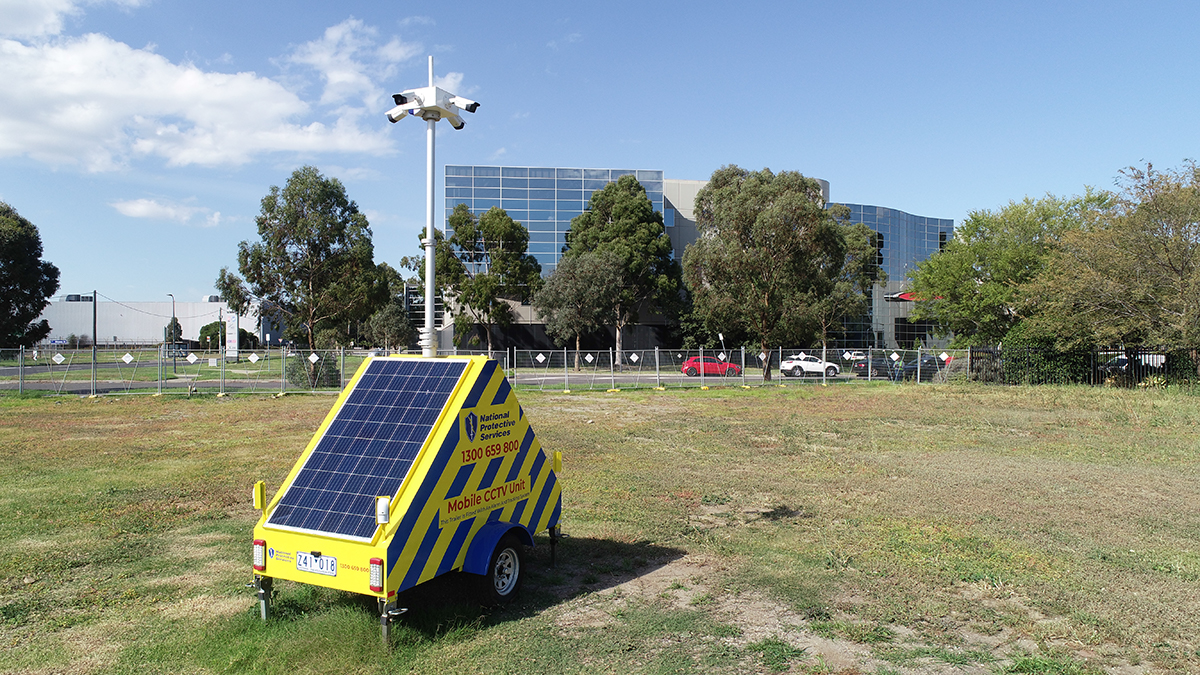
Surveillance and detection. CCTV coverage of external cabling routes, electrical pits, and access points gives you visibility over the areas being targeted. Video analytics can detect after-hours movement and generate alerts before theft occurs rather than recording it for review after the fact. For sites without permanent power or fixed infrastructure, such as construction sites and council grounds, mobile solar-powered surveillance units can be deployed quickly and repositioned as needed.
Monitoring and response. A camera system that nobody is watching overnight is a recording device, not a prevention tool. Professional monitoring through a Grade A control room means activity is verified by an operator in real time. If the threat is genuine, the response is coordinated: patrol dispatch, site contact notification, or police escalation with confirmed detail about what is happening on site.
Access control and lighting. Managing access to electrical infrastructure, plant rooms, and service areas reduces the opportunity for theft. Adequate lighting at vulnerable points (electrical pits, cable routes, perimeter fencing) increases the perceived risk for offenders and improves camera footage quality.
Patrols. For facilities that are unattended overnight or on weekends, mobile patrols provide physical verification on a scheduled or random basis. Patrols are most effective when coordinated with monitoring, so that officers respond to verified alerts with specific site knowledge rather than conducting routine checks without context.
Concerned Your Site Is At Risk?
The sectors most affected by the copper theft surge, including schools, councils, healthcare facilities, and commercial property, are sectors we work with every day. We understand how these facilities operate, where their infrastructure is exposed, and what practical security measures fit their environment and budget.
If copper theft is affecting your facility, or if you want to assess your exposure before it does, we can help you work out what level of protection makes sense for your situation.
Contact our team online, email us at info@natprot.com.au or call 1300 659 800.